
Borrowed Hope: On Koorsoo, Resistance Songs, and Collective Imagination
/My hope ebbs and flows.
Often drastically from day to day, or within a span of hours. It wanes in direct proportion to how much news I consume, how much time I spend outside, how long it’s been since I’ve had a stimulating conversation or seen live music, and where the moon is in her cycle.
But over the past few brutal years, I’ve learned what my body needs to keep hope alive; community, music, movement, space for deep reflection, and a sense of shared purpose.
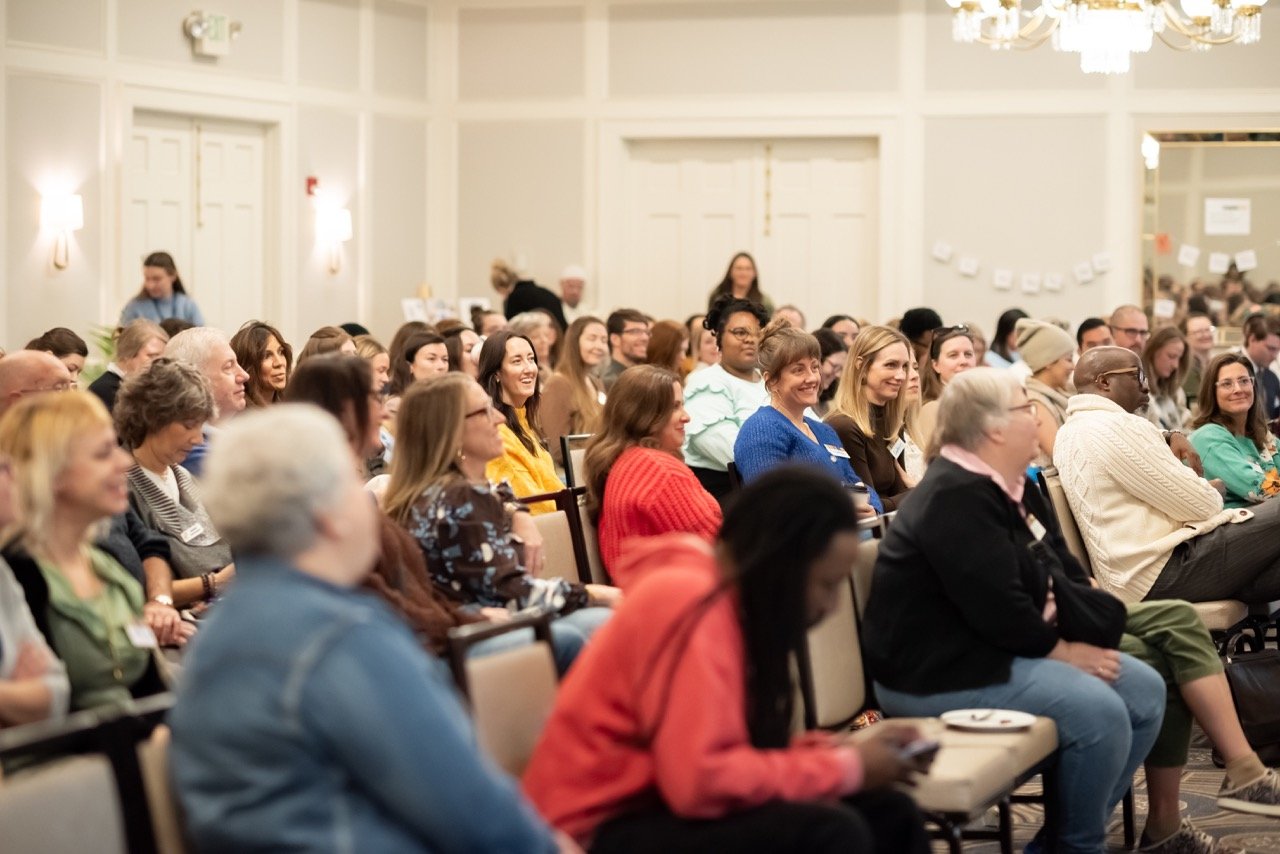
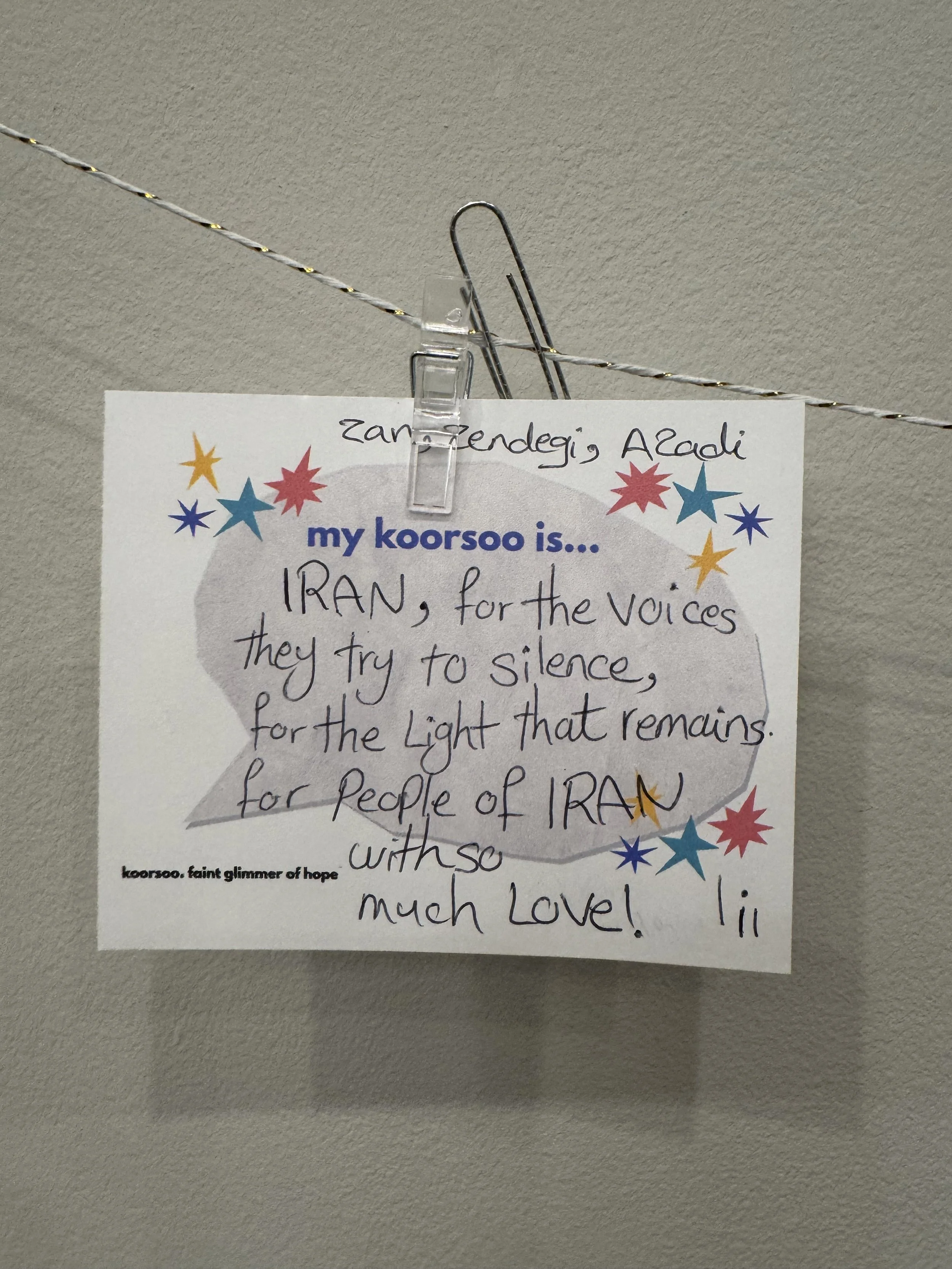
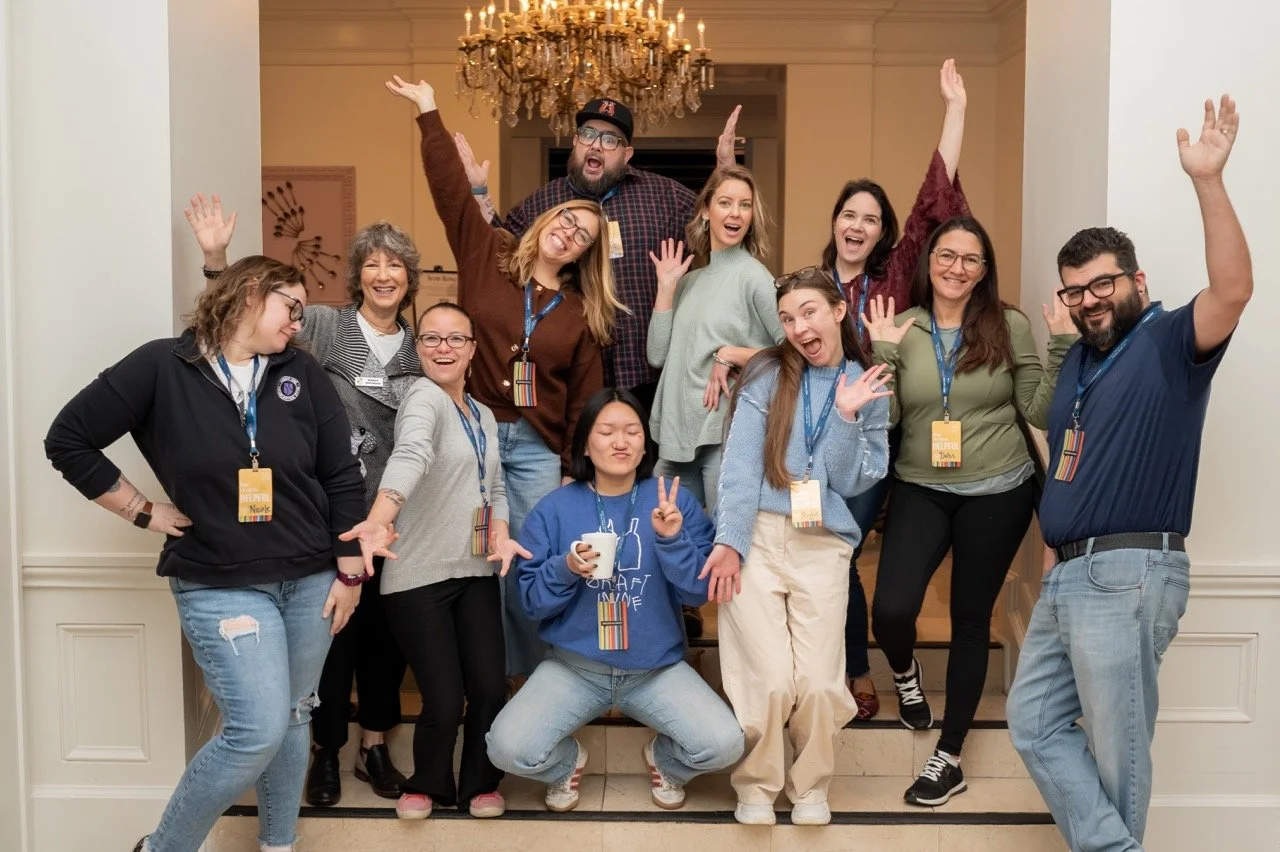
Three weeks ago, Creative Mornings Charleston gathered over 150 people to talk about koorsoo — a Farsi word meaning "a faint glimmer of hope." This word was sent to us by our fellow organizers at our Tehran chapter in Iran.
In the days leading up to our event, tens of thousands of people were murdered by the Islamic Republic, as Tehran and cities across Iran revolted against the regime.
Throughout the month of January, thousands of people gathered in events like ours, across 255 cities, in 70 countries, to talk about hope. The painful synchronicity of this theme, sent to us at this time, felt like an SOS from a country and a people begging the outside world to pay attention, to bear witness.
I read their words aloud:
"In our darkest hours, when everything seems to have dimmed, sometimes a light remains—not bright, not certain, but real. That is Koorsoo. A faint glimmer of hope that dares to survive. In a world that often normalizes despair, Koorsoo is a rebellion; soft, but profound."
We dedicated the morning to our fellow organizers in Tehran, playing "Baraye" by Shervin Hajipour—an aching Iranian song that a friend shared with me. It was released during the peak of the Women, Life, Freedom movement and later won a Grammy in 2023 for Best Song for Social Change. As the song played, I asked everyone to practice a koorsoo visualization: imagining that faint glimmer growing into a blinding light shining down on a free Iran. People dancing in the streets. Peace rippling across the region. The world chanting, Zan, Zendegi, Azadi.
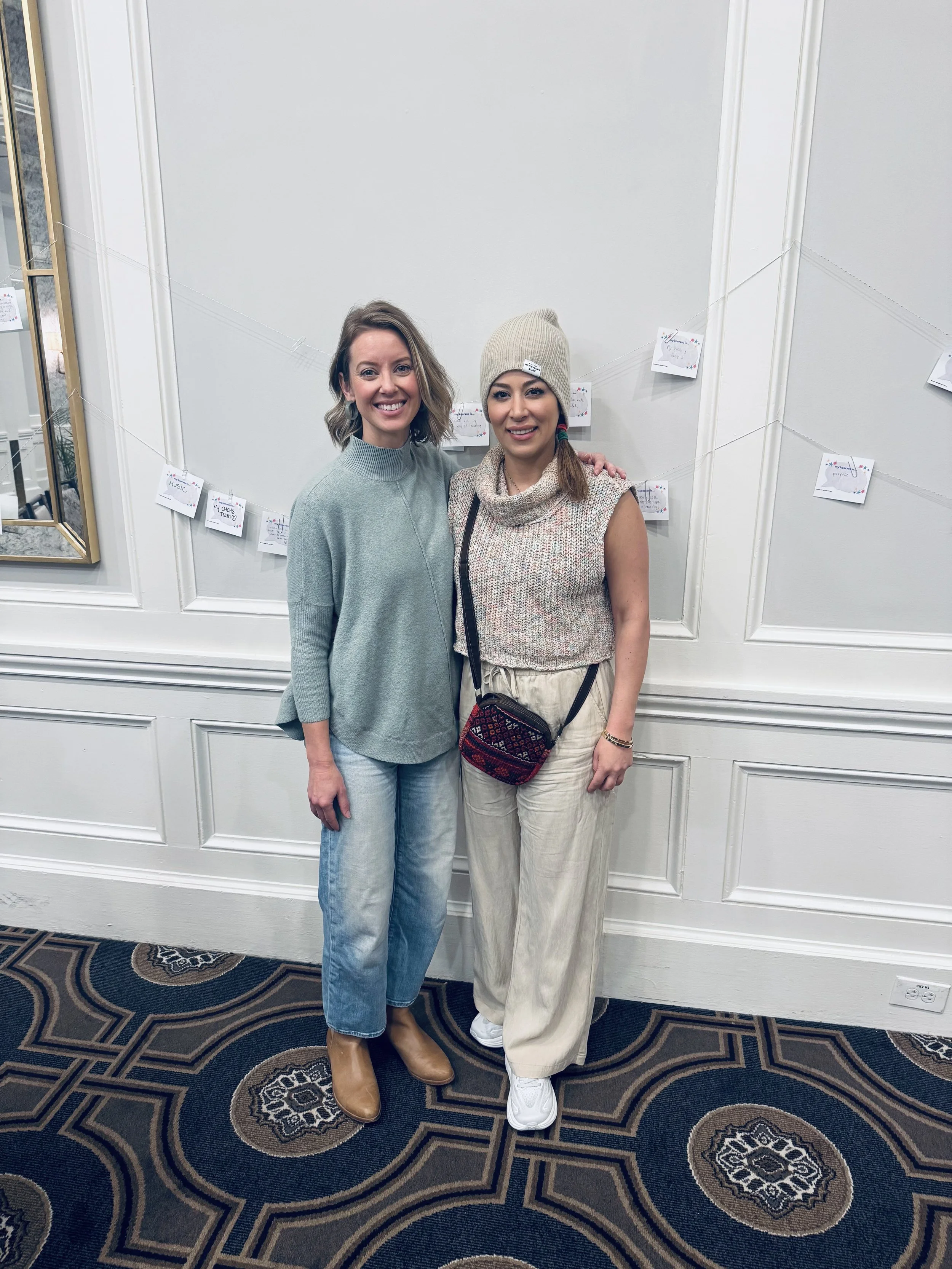
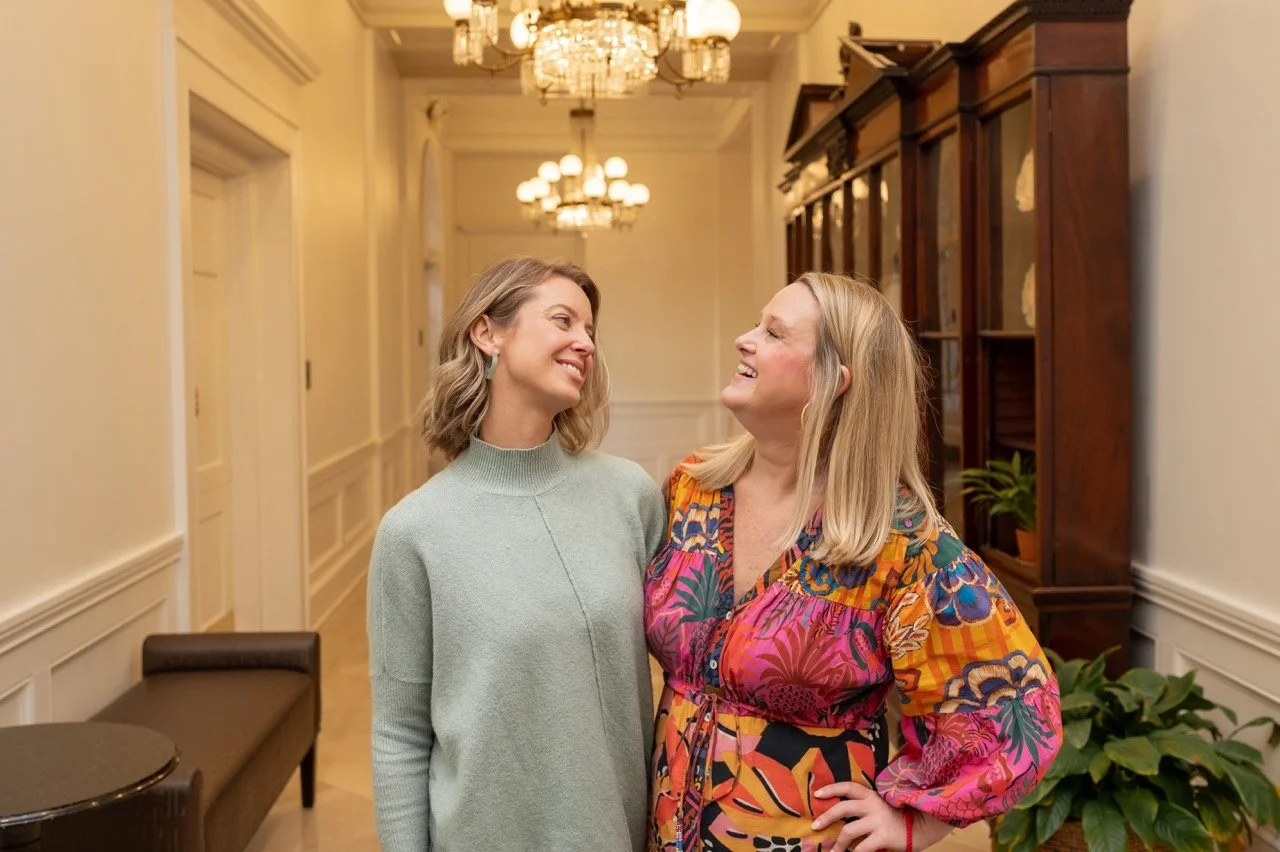
This kind of collective visioning is an exercise I've been practicing more intentionally over the past year, in large part thanks to Cate Mayer and her work with Be The Ones. Cate is someone I've had to borrow hope from more times than I can count, and someone I knew could help us hold this impossibly heavy theme.
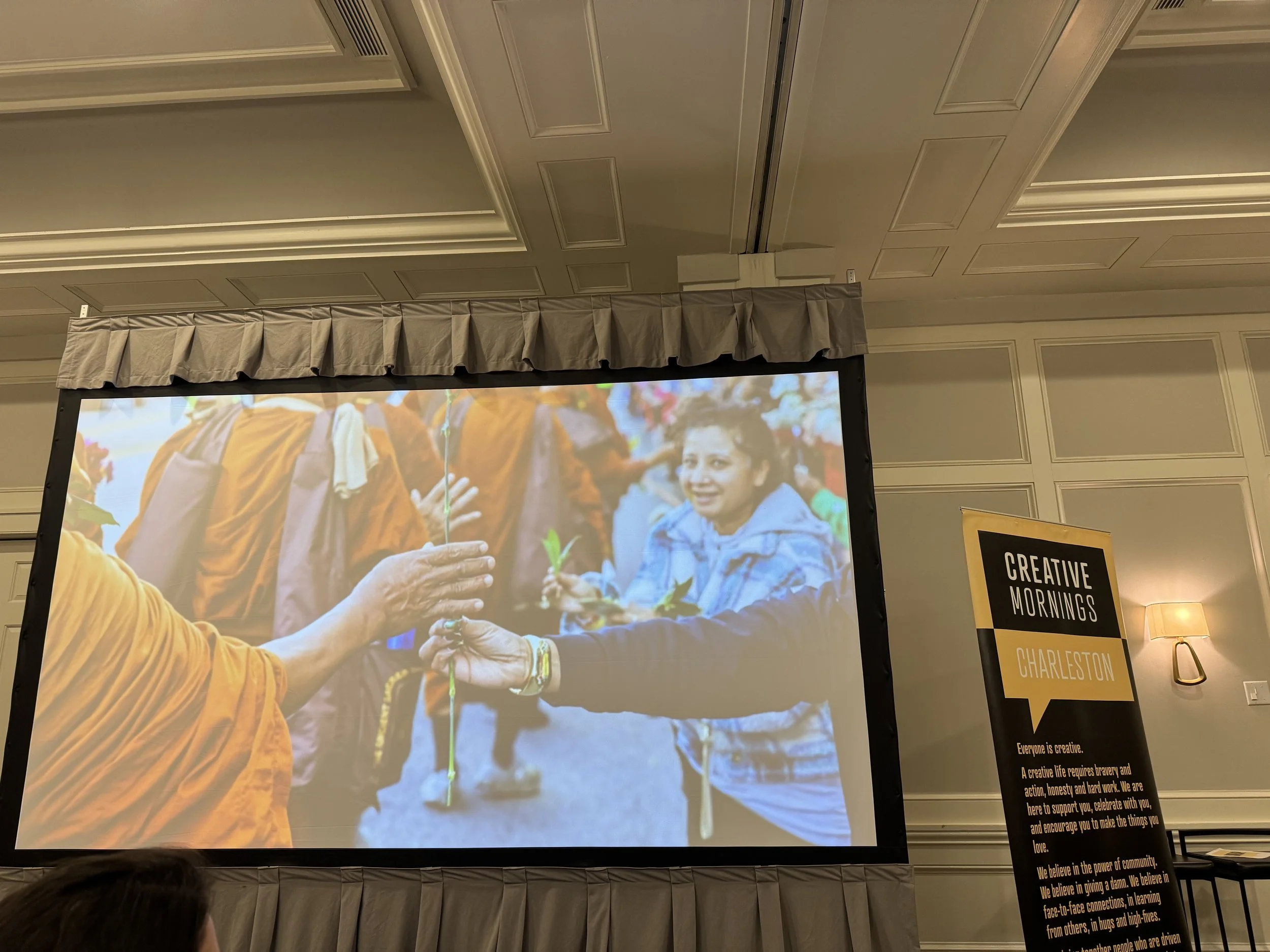
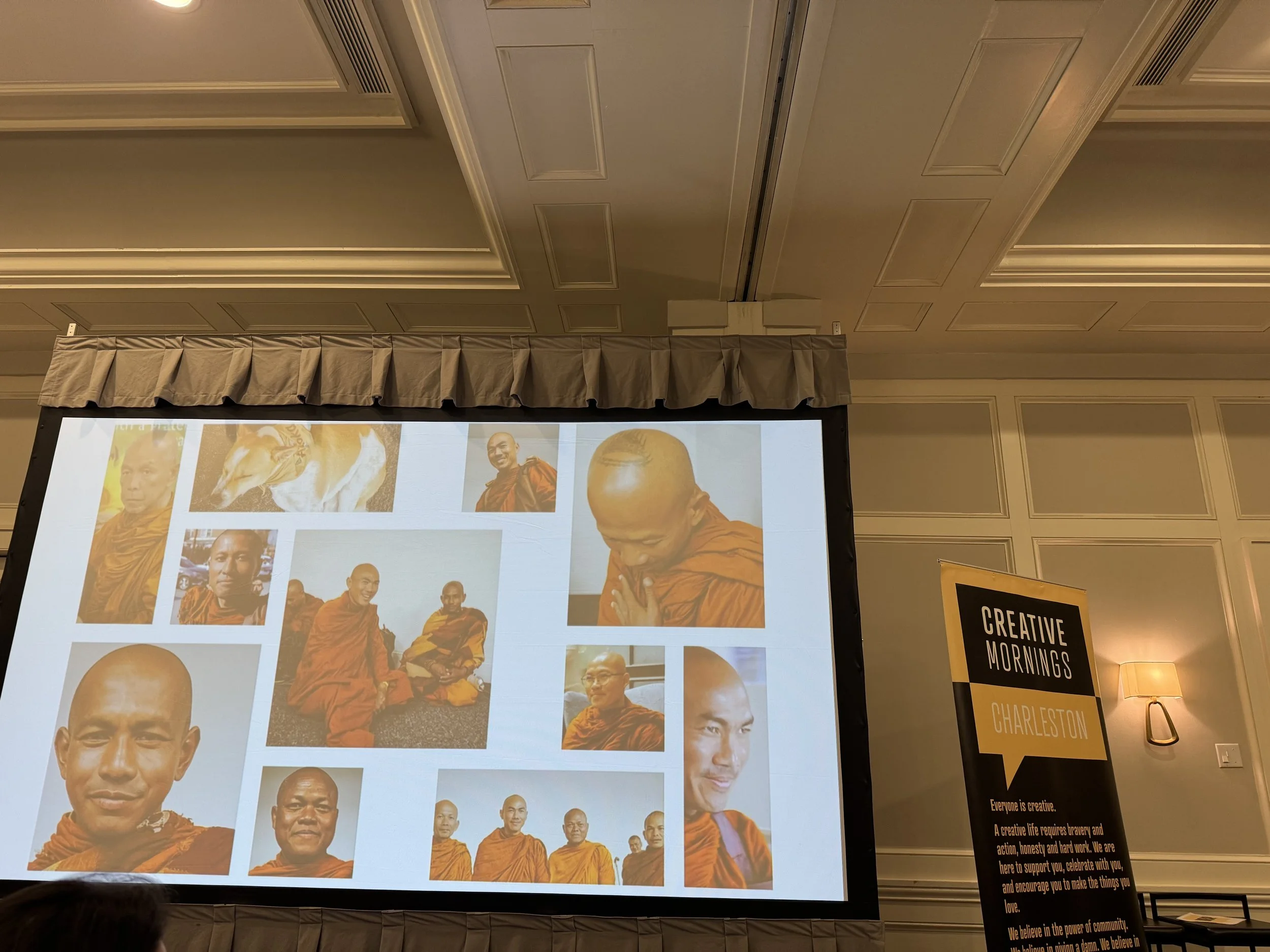
A passionate connector and artistic activist, Cate's work centers on reimagining civic life—from organizing the Walk for Peace with Buddhist monks traveling through South Carolina, where over 20,000 people showed up, to creating intimate installations that help us reclaim what hope actually means.
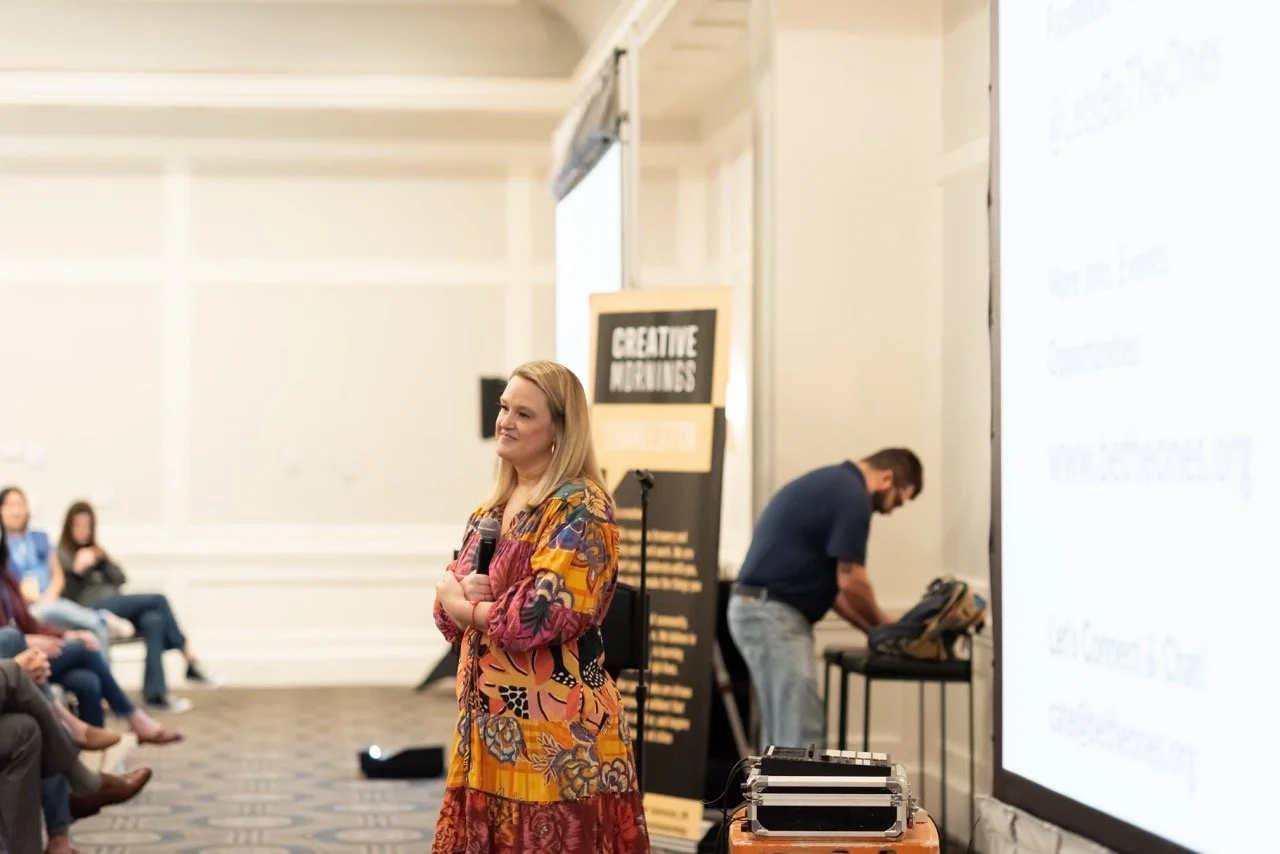
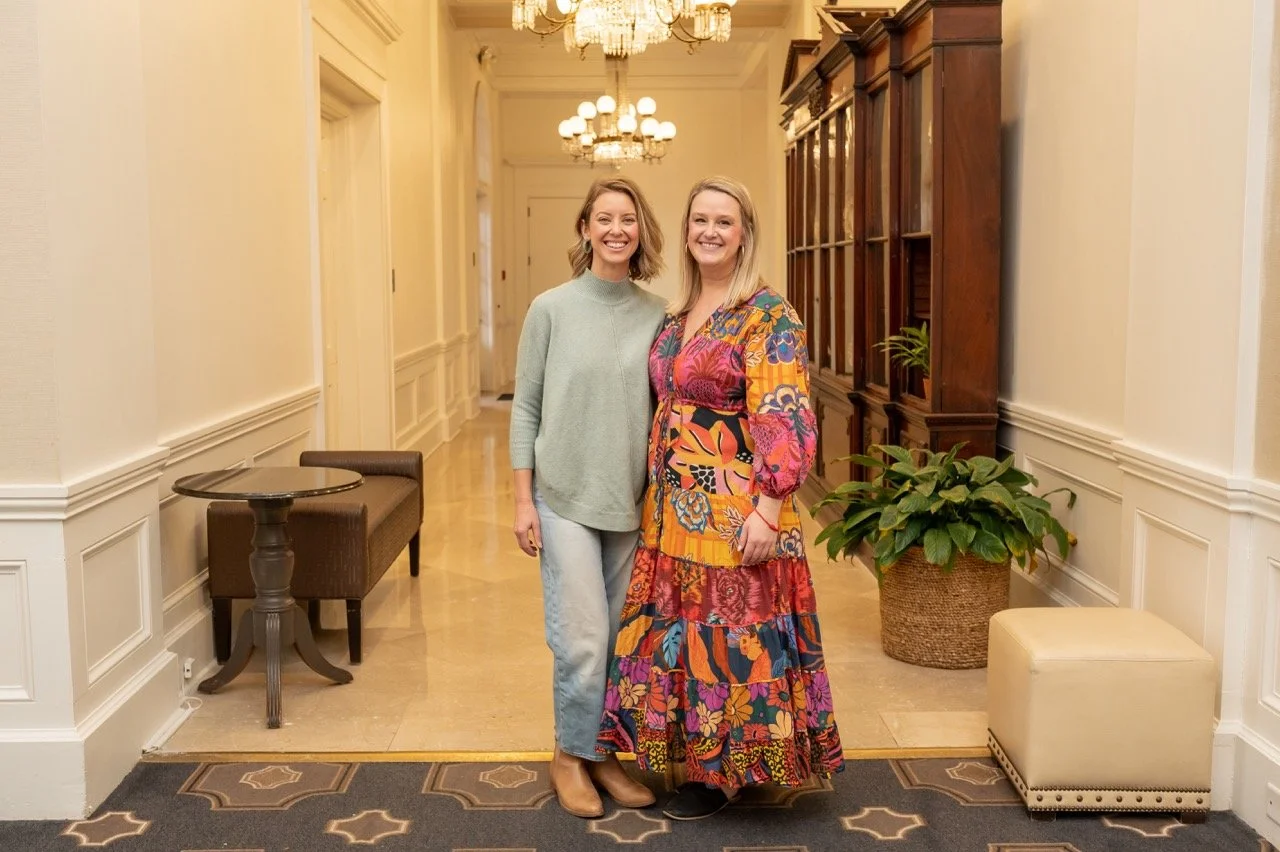
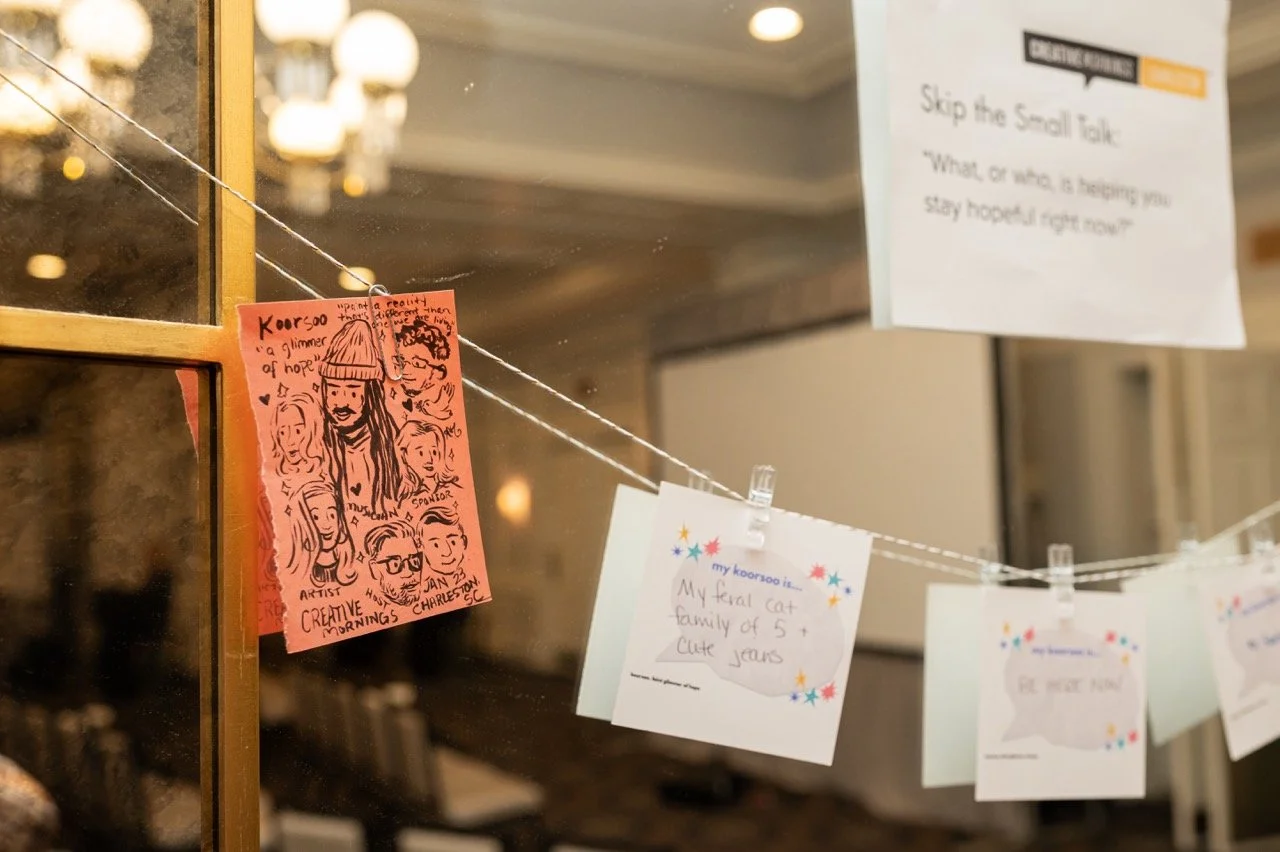
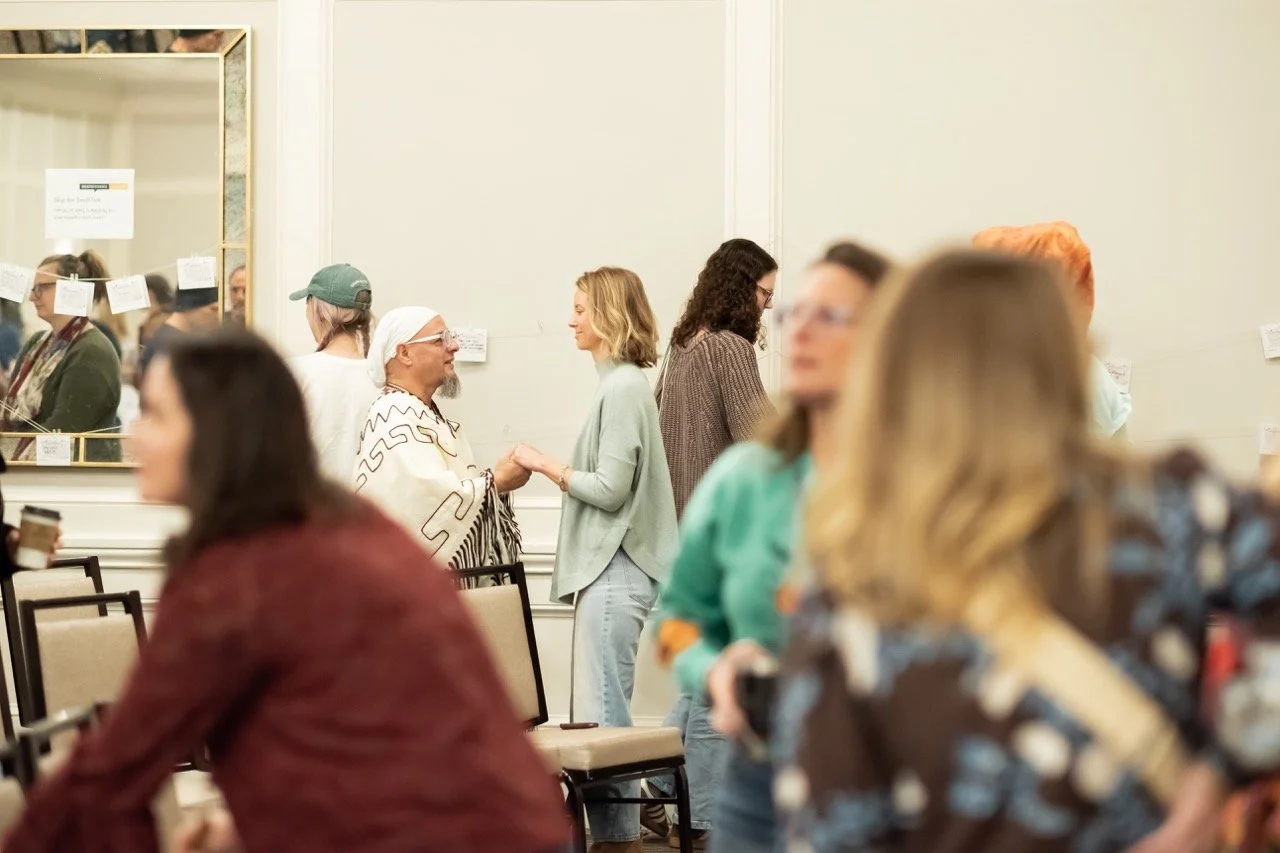
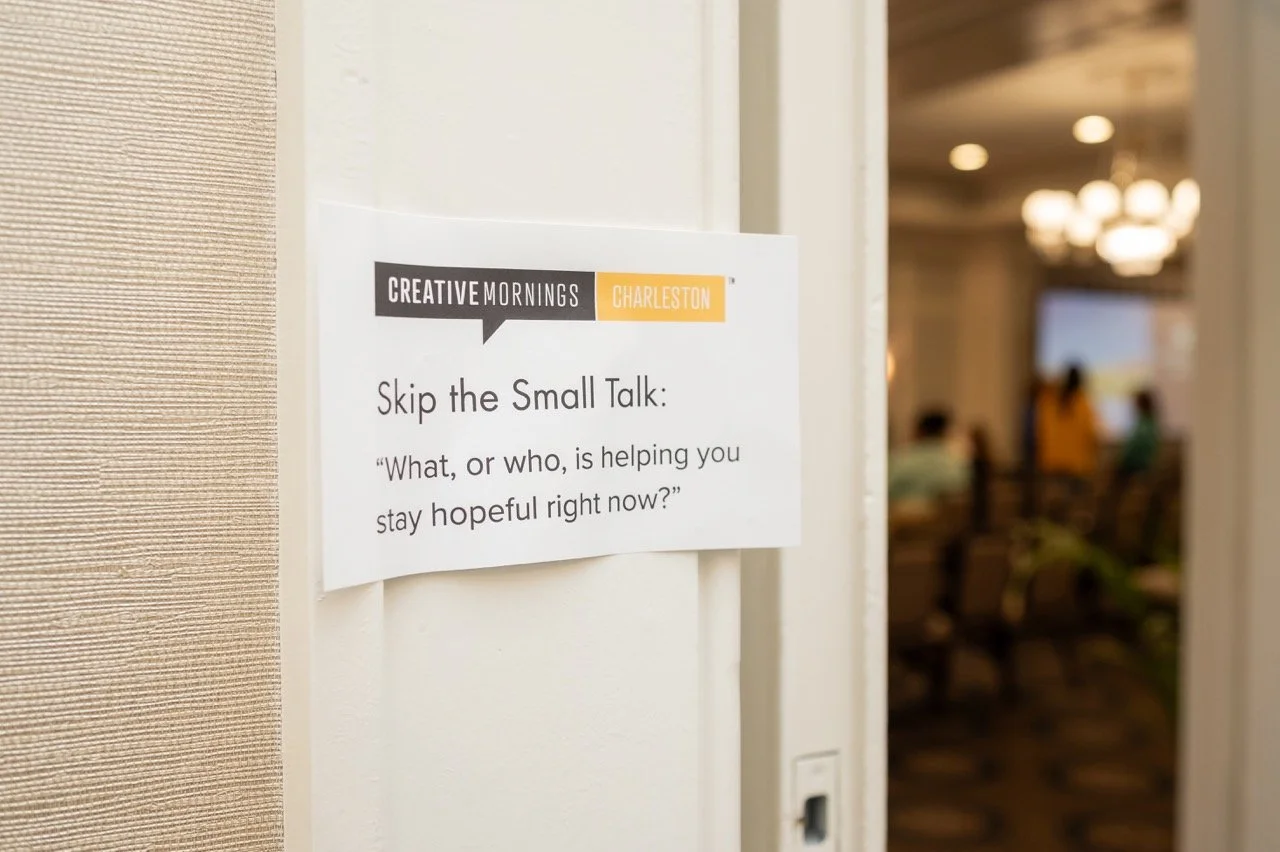
Because, as Cate reminded us that morning, "somewhere along the way, hope became confused with optimism. With positivity. With pretending things are ok when they're not."
The kind of hope Cate talks about requires uncertainty. It lives in the space where the future is unclear, and we choose to act in alignment with our values anyway. "Rather than fixating on a single outcome, hope asks us to anchor ourselves in who we want to be. How we want to show up, what we refuse to let go of.”
Before we all left that morning, Cate asked everyone to write down one thing keeping them hopeful and hang it on a string. Civic engagement in its simplest form: naming what we love, and showing each other what we're fighting for.
A string of glimmers to light the long days and weeks ahead.
A lot has happened since then.
More ICE violence. More gaslighting. More Epstien files. Zero accountability.
My koorsoo dimmed.
Then Bad Bunny came on the field. I danced and cried and felt immense orgullo to witness such a vivid illustration of what America really looks like, of how beautiful we are, together. The entire production was a brilliant display of collective imagination, something we practice every month at events like Creative Mornings, and in every place where we gather intentionally to imagine a different way.
And last week, in a Unitarian church hall, my koorsoo was restored again, at Peace Choir practice. Inspired by the thousands of people singing and drumming in the streets of Minneapolis, we learned resistance songs and talked about how song has been a bastion of hope through slavery and every social justice struggle that has followed. Immediate tears as soon as the group sang the very first note. The sound awoke a frequency that connected me back through time to everyone who has fought to keep joy and justice alive. We sang songs that weave the common thread of humanity and justice through time; from the civil rights movement with “We Shall Overcome,” to today's resistance in “Heavy Foot” by Mon Rovia.
It was the best thing I've done for my soul in a long time. A reminder that hope is an action – sustained in community; in small groups coming together to imagine the world we want to be part of, note by note, beat by beat.
As I sat in the church that night, I practiced the same visualization I'd led weeks earlier. To my right was a wall covered with sticky notes arranged to spell out H.O.P.E.—answers to the same question, borrowed from Cate's 'string of glimmers' installation.
I don't know how we're going to change this world, but I know collective imagination will play an important part. And that sometimes, we will have to borrow hope from each other to keep going.
#CreativeMorningsCharleston #Koorsoo #WomenLifeFreedom #CollectiveImagination
Follow me on Substack